Migration Centre of Australia

Blog

Genuine Temporary Entrant (GTE)

The Genuine Temporary Entrant (GTE) criterion is one of the key requirements for the subclass 407 Training visa. Let me address this today for the benefit of those who may be thinking of applying for this visa.

Read more

Second Working Holiday Visa Update

Second Working Holiday Visa Update Visa applicants who will be doing their specified work after 31 August for their second WHV will need to make sure that they have pay slips that cover each day of work when submitting an application for a second Working Holiday visa.  Electronic copies of applicants pay slips can be uploaded as attachments to their online second Working Holiday visa application, or hardcopies can be provided with a paper application. All Australian employers must provide their employees with pay, conditions and workplace entitlements in accordance with the Fair Work Act 2009 or relevant state legislation. This includes work performed in Australia’s agriculture sector, such as plant or animal cultivation activities on a farm. From 31 August 2015, all applicants for a second Working Holiday visa must provide pay slips as evidence of appropriate remuneration with their application. This will help ensure that work undertaken by Working Holiday visa holders is performed in accordance with workplace law. All Australian employers are legally required to provide their employees with pay slips. Work performed before the commencement date will not require pay slip evidence. Pay slips need to show that the participant’s specified work was paid work and that the pay was in accord with the basic pay entitlements employees should receive when working in Australia. Australian rates of pay can be found on the Fair Work Ombudsman website. Temporary transitional arrangements The Department acknowledges that some participants will be in the middle of a work placement on 31 August 2015, and might be unable to provide pay slips for work undertaken on/around that date. In this scenario, pay slips will not be required, provided it is clear from the dates on the participant’s specified work supporting documentation (such as Form1263 (171KB PDF)) that the placement was already underway on 31 August 2015. Questions you may have about your circumstances: What if I’m not given pay slips from my employer? Don’t be afraid to ask your employer for pay slips – it’s your legal right, and they have to contain certain information. For more information about pay slips, go to:http://www.fairwork.gov.au/pay/pay-slips-and-record-keeping/pay-slips How do I know if I’ve been paid the right amount? In some cases, your pay rate will be set by the national minimum wage, which is currently $17.29 per hour (before tax).  You may be entitled to a higher rate if you are covered by an award, enterprise agreement or other registered agreement. For more information about pay, and to use the ‘Pay Calculator’, go to: http://calculate.fairwork.gov.au/findyouraward What about volunteer work? We know that some groups, like Willing Workers on Organic Farms, promote themselves to Working Holiday visa holders. If you’d like to volunteer some of your time to help out doing activities that count as specified work, you can, but you won’t be able to count it towards your 88 days specified work if you start the volunteer work after 31 August 2015. If you started the volunteer work before 31 August, you will be able to count all days worked on the placement, even if you finish up after 31 August. If you finished volunteer work before 31 August that counts as specified work, you can include these days towards your 88 days specified work if you apply for a second Working Holiday visa.
Read more

New legislation makes it a criminal offence to pay for 457 sponsorships

New legislation makes it a criminal offence to pay for 457 sponsorships Last week the government introduced legislation to the Parliament to make it a criminal offence for a sponsor to be paid by a visa applicant in return for securing a migration outcome. This is one of the recommendations of an independent review of the integrity of the subclass 457 programme. The government provided its response to this review, Robust New Foundations, in March this year. The review recommended the introduction of a new penalty making it unlawful for sponsors to receive payment in return for sponsoring a 457 visa. The Migration Amendment (Charging for a Migration Outcome) Bill 2015 implements this recommendation and expands the application beyond the 457 visa programme to other temporary and permanent work visas. The practice of giving or receiving a benefit in return for visa sponsorship can have serious detrimental effects including possible exploitation, undermining of Australian pay and conditions and can damage the integrity of Australia’s migration programmes. Minister Cash said the legislation sends a very clear message to those who are tempted to engage in this type of activity. ‘Those who think they can get away with this kind of behaviour take note – we will target you and we will bring you to justice,’ Minister Cash said. There will be a framework for criminal, civil and administrative sanctions against sponsors who actively ‘sell’ sponsorships, or seek to obtain an undue advantage in return for sponsoring a person. The Bill also introduces a new discretionary power to allow for cancellation of a visa where the visa holder has engaged in ‘payment for visas‘ activity. Minister Cash said the new penalties will further strengthen the integrity of Australia’s migration programme, building on a number of initiatives announced over the past two years.
Read more

Student Visa Cancellations

Student Visa Cancellations It has been reported in the Australian on the 2nd of September that the Department of Immigration and Border Protection cancelled 10,949 student visas between the start of July last year and the end of June this year, compared with 8018 in the previous year and 8930 in the year ending June 2013. The visa cancellation figures, indicate that Chinese students had the biggest number of student visa cancella­tions; 1793 in the past 12 months. More than 1160 South Korean students had their visas cancelled, followed in number by India, Vietnam and Thailand. The total number of student visas issued rose by 2 per cent, from 292,060 to 299,540. The new figures come as the government puts finishing touches on he SSVF (simplified student visa framework), with a working group of international education sector stakeholders holding its concluding meeting last week. The updated framework will mean a broader, simpler, fairer framework for both international students and Australian education providers which will reduce the number of student visa subclasses from eight to two, by the middle of next year. The altered student visa framework will will replace both the Streamlined Visa Processing (SVP) arrangements and the current Assessment Level Framework and will apply to all international students. It will lay out a student’s financial and English language evidentiary requirements based on two things: the immigration profile of the student’s country of citizenship and of their education provider. Phil Honeywood, chief executive of the International Education Association of Australia, said the present system allowed low-quality education providers to misuse the visa streamlining scheme. The Streamline Visa Processing arrangements end at the end of the financial year 2015-16. The agencies responsible for the quality assurance and regulation of education services for overseas students will work closely with the Department of Immigration and Border Protection on the new regime.
Read more

Revised South Australian State Occupation List from 1 July 2015

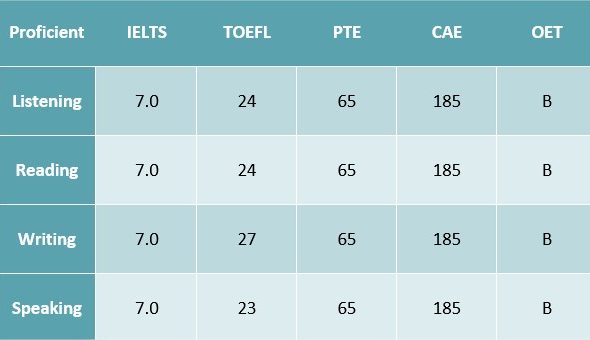
Immigration SA will be publishing a revised South Australian State Occupation List on 1 July 2015.  Occupations that are not available on the State Occupation List will be listed on the Supplementary Skilled List and are available to applicants who meet additional requirements. The Supplementary Skilled List reflects all occupations available on the Commonwealth’s Consolidated Sponsored Occupations List (CSOL) that are not listed on South Australia’s State Occupation List. 190/489 application system closing temporarily The application system will be closed down at 1 pm on 30 June 2015 and re-opened at 12 pm on 1 July 2015. Saved applications and applications submitted but no payment made If you have a saved 190 or 489 state nomination (GSM) application or an application submitted with no payment made, you will need to submit the application and make the payment before 1 pm (South Australian time) on 30 June or submit a completely new application from 12 pm on 1 July. All saved applications and applications which have been submitted (but no payment made) will be deleted at 1 pm on 30 June 2015. English requirements There will be some changes to English requirements for occupations and we would like to give you advance notice of changes to the following occupation groups: ICT occupations – Proficient English in each band score (or an overall score of Proficient Plus – i.e. IELTS 7.5 overall). Engineering occupations – Competent Plus English (or an overall score of Proficient i.e. IELTS 7 overall). There will be changes to the English requirements for other occupations. Please check the occupation lists on July 1 2015 for details. For information on what the terms Competent, Competent Plus and Proficient are for each of the accepted English tests, please refer here. State nomination requirements All applications from July 1 2015 must meet the new requirements published.
Read more

Migration Centre of Australia (MCA) Your trusted partner for Australian immigration. We simplify visas, skilled migration, sponsorships, and more—so you can focus on your future.

Contact Info

+61 2 4626 1002
info@migrationcentreofaustralia.com.au
Suite 6, Level 12, 101 Bathurst Street, Sydney NSW 2000
By Appointment Only

Campbelltown Office:

Unit B2/5-7, Hepher Road, Campbelltown, NSW 2560

Melbourne Office:

Ground Level, 161 Collins Street, Melbourne VIC 3000

Follow Us