
Migration Centre of Australia

Blog

Crackdown on asylum seekers? Because our government is good at bad jokes.

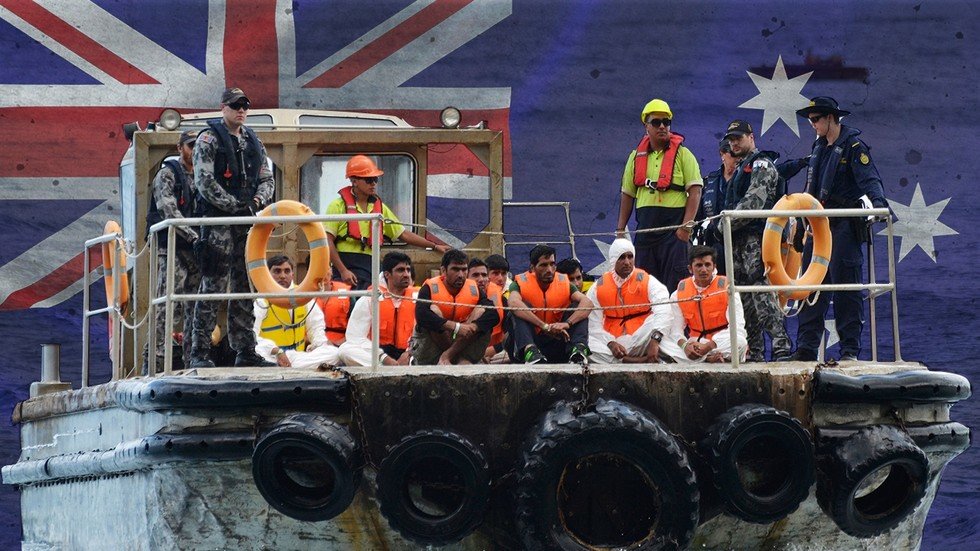
Crackdown on asylum seekers? Because our government is good at bad jokes. The Turnbull Government’s last week announced to launch a crackdown against asylum seekers in Australia is set to start a fierce debate not only inside Australia but around the world. Local and international media are already on it, calling this move a “shocking cruelty”, a “rort”, and some even referred to it as “throwing refugees to lions’ den”. I strongly agree because I have dealt with migrants in different situations for years and known their helplessness and agonies very closely. The crackdown begins with the launch of this new visa, called the “final departure Bridging E Visa“, under which not only income support of about $200 a fortnight will cease (starting this week), but they will also be given a three-week deadline to move out of government-supported accommodation. This new visa is being issued to dozens of asylum seekers transferred to Australia from offshore detention for medical reasons; and bear in mind that this may include a pregnant woman. So once the support is gone, followed by the accommodation; these stranded refugees will be expected to support themselves and their families, if any, in the community until departing Australia. The Immigration Department’s letter reads: “From Monday 28 August you will need to find money each week for your own accommodation costs. From this date, you will also be responsible for all your other living costs like food, clothing and transport. You are expected to sign the Code of Behaviour when you are released into the Australian community. The Code of Behaviour outlines how you are to behave in the community.” Even an average income earner in Australia knows how hard it is to get an accommodation and a job. Who is going to give these abandoned people a rental for three weeks and a job, let alone clothes and transport? If this step is some kind of joke, I must say it is a very bad one; and if it is happening for real, it is time for members concerned in the Australian government to seriously sit as sane adults would do and review the country’s policies on asylum seekers. The current government has been reiterating its vested interest to improve the refugee regime, but very few believe that by taking such steps, they are helping themselves or the country’s international image. Even the UN Global Compact on Refugees report that was released today recommends that Australia needs an internal review of the country’s asylum and refugee policy against the commitments in the Global Compact, in order to lend credibility to its contribution. Australia is known for its multiculturalism; its people identify with more than 270 ancestries; almost seven million people have migrated to Australia since 1945; and its rich diversity of cultural, ethnic, linguistic and religious backgrounds are unmatchable. Australian society is one of the most accepting, welcoming and tolerant societies in the world – values that every Australian teaches their kids. So please Mr. Dutton and Mr. Turnbull, don’t ruin this for us, our children and all of the future Australians.

Read more

Over 225 illegal workers detained in visa fraud crackdown

Over 225 illegal workers detained in visa fraud crackdown At least 40 illegal workers were detained in Perth during a nation-wide crackdown on visa fraud on Monday. The Australian Border Force had been carrying raids across the country at both business and residential properties under Operation Bonasus. So far country-wide, 225 illegal foreign workers from Malaysia, Indonesia, China, Vietnam, Tunisia, Pakistan and Bangladesh have been located in industries including agriculture, retail and hospitality. In addition, more than 300 individuals were refused entry to Australia as part of the operation.
Read more

Cheat-codes: Employing ‘ghost-writers’ for competency demonstration reports is a bad idea

Cheat-codes: Employing ‘ghost-writers’ for competency demonstration reports is a bad idea Preparing competency demonstration reports (CDRs) required by Engineers Australia for qualification assessment for engineers migrating to Australia baffles everyone, and to say the least it is perfectly normal and natural to feel that way. While it is no rocket science, I have increasingly noticed engineer migration visa applicants hiring services of other people to write these reports for them. Most of these writers hired for the job are not even engineers themselves. This is one major reason applicants get a negative assessment, ending up in a bigger mess; and others ending up giving huge, and totally unnecessary, amount of money to these writers. This is wrong on many levels but most importantly a compromise on one’s rectitude. Engineers Australia expects applicants to write their reports themselves so the assessors can have an insight into the applicant’s qualifications and competencies, among other things they count. By asking other people or companies to write these reports is unlawful by both the applicant and the company providing such services. It is like hiring a professional writer to write a thesis/dissertation for you and then walking proudly down that isle on your graduation day to get that degree. Things don’t match here, do they? It’s becoming annoying to see the number of such companies to have increased two-folds in the last decade, mainly outside of Australia, who are very confidently approaching Migration Agents and visa applicants to use their services. Recently, my team working around some visa applications was contacted by a company offering to write CDRs on behalf of engineers for a fee. In one of these instances, they claimed to have “a team of Engineering Graduates performing the CDR writing activities”. This has been unnoticed but is a huge problem because if engineer applicants are not writing their career episodes themselves, Engineers Australia cannot know if the applicant is an engineer at Australian standards. This is frustrating for assessors and migration agents alike, and so I want to raise this issue. True that these companies have spread as swarms and it will be very idealistic to stop them, but what the assessing authority can do is to warn applicants of penalties for such deception. Every Australian assessing body expects the applicant to be reliable, have good written communication, have values and ethics and by employing “ghost-writers”, applicants take the first step towards compromising these basic attributes and requirements. On this note, I would like to invite our members, who have had the chance of working with successful engineer applicants, to share their experiences on what makes a promising CDR as a guide for our readers. Thank you!
Read more

Training Benchmark B – Requirements Clarified

Recent 457 reforms have led to increasing uncertainty and confusion among migration agents and businesses, specially with respect to Training Benchmark – B. One of the recent legislative instruments though was intended to make policy settings clear, added to the confusion as the PAM: Temporary Work (Skilled) visa (subclass 457) – sponsorships had a few unclear instructions. As a responsible RMA and a CPD Presenter in the industry, I wish to clarify on some of the concerns raised by our colleagues, including whether expenditure on online training/e-learning can be considered as an applicable expenditure for the purpose of meeting Training Benchmark – B. The migration instrument, IMMI 17/045: Specification of Training Benchmarks and Training Requirements lists the requirements to meet the required training benchmarks to be eligible for sponsorship under the subclass 457 visa program. According to the instrument: Applicable expenditure that can count towards Training Benchmark B includes: payments for Australian employees to undertake a formal course of study, including any reasonable and necessary associated costs (e.g. costs of travelling to the training venue or access an online training programme); payments to RTOs to deliver face-to-face training to Australian employees that will contribute to an Australian Qualifications Framework qualification; purchase of an eLearning platform or standalone training software; payments to cover the salary of Australian employees: engaged by the business as apprentices or trainees under a formal training contract, or who have completed an undergraduate or higher degree in a university within the last 2 years, and are participating in a formal, structured graduate program for up to 2 years, or completing a professional year following their graduation; the salary of a person whose sole role is to provide training to Australian employees; expenditure to attend conferences for continuing professional development. Inapplicable expenditure that cannot count towards this benchmark includes: on the job training that is not otherwise identified above as applicable expenditure for Training Benchmark B; training that is not relevant to the industry in which the business operates; training undertaken by persons who are principals in the business or their family members; training that has a very low skill level having regard to the characteristics and size of the business; induction training; staff salaries apportioned to time spent undertaking online or other training courses; purchase of software for use in normal duties; membership fees; purchase of books, journals or magazine subscriptions; attending conferences for purposes other than continuing professional development; and hiring a booth at a trades show, conference or expo. I wish to clarify that staff salaries apportioned to time spent undertaking online or other training courses cannot be counted towards applicable expenditure, however, expenses incurred on online training (or e-learning) courses can still be counted as applicable expenditure towards Training benchmark – B. Regulation 5.19 (Approval of nominated positions (employer nomination)) makes it clear that costs associated with an employee participating in or accessing an online training course may be counted towards expenditure on training, however, wages covering the employee/s’ time to attend/complete an online training course cannot be counted. The confusion is due to explanation in PAM: Temporary Work (Skilled) visa (subclass 457) – sponsorships which states that expenditure that cannot count towards this benchmark includes costs associated with staff completing online training courses, which actually means the costs associated such as salaries or wages paid during the online training or e-learning. One of the DIBP Case Officers wrote to an RMA saying that E-learning cannot be counted towards TB-B expenditure after 1st of July, and I advised the RMA to write back to the Case Officer: that Case Officer’s understanding on the changes was not clear, and ask the Officer to provide any evidence towards that. Though this may have sorted the matter for the RMA but I thought there was need to discuss this issue for other RMAs as well. In summary, E-learning is still a valid option for Training Benchmark B. In fact, there have not been any significant changes which would affect meeting requirements for TB-A or TB-B. I hope this helps clarifying major confusions around TB-B. Please do not hesitate to call me should you have any other doubts about training benchmarks or sc457 in general. Sincerely, Praveen
Read more

Skills For Tomorrow: Collaborating for the Future: Australia-Indonesia-ASEAN Symposium 2017

Skills For Tomorrow: Collaborating for the Future: Australia-Indonesia-ASEAN Symposium 2017 Education and business leaders along with government representatives from Australia and the ASEAN region will meet in Jakarta in a month for an open discussion on enhancing institutional collaboration. Led by the International Education Association of Australia (IEAA) and supported by TAFE Directors Australia (TDA), the two-day event, Skills for Tomorrow, Collaborating for the Future: Australia-Indonesia-ASEAN Symposium 2017, aims to foster mutual, long-term engagement between education providers from Australia and across the region. With a dual focus on the VET and higher education, it will look at skills and labour shortages, promoting quality frameworks, VET systems and products, and supporting international mobility of skilled labour. The higher education stream, relevant for TAFEs that offer higher education qualifications, will examine internationalisation priorities and strategies, fostering collaboration, and enhancing research collaboration. TDA encourages TAFE institutes to consider this event, where the VET program has been specifically tailored for TAFEs and where there will be networking opportunities with Indonesian ministerial representatives, including the Ministry of Manpower, Institutions and Industry.
Read more

Calculating multiculturalism? Count us in!

Calculating multiculturalism? Count us in! Among the many predictable and startling revelations by the 2016 Census results made public this week, one that caught my eye as someone from the Indian descent was that one of every five migrants is either a Chinese or an Indian. Now that makes a lot of Indians in the country, which not only speaks volumes of their capacity and skill but also the promising relationship between Australia and India on many levels, including the migration programme. My point here must not be taken in its manifest meaning. It is about survival, about integration and a chance for a better life and a safe and secure future for those who come from a non-native English speaking background and an entirely unalike culture and society that welcomes them here in Australia. My point is about oneness and the confidence which the Australian people have the ability to give to newcomers in their homeland. My point is about acceptance and not rejection. MY point is about fairness, tolerance and recognition and not about seclusion, racism and prejudice. These numbers have made me proud first as an Australian and then as someone who has lived nearly half of his life in India – a country whose migrants make up a big chunk of the Australian population. The Census is no doubt the largest portrait of any country and exposes a nation in and out. Our 2016 Census has revealed the evergreen image of Australia as one of the most multicultural, diverse and welcoming nations on earth. Where else can one of every fifth person be a migrant; 49.3 per cent of people be first and second generation residents; and the fastest growing religion be a non-Christian religion – Nowhere else, but Australia; and amid all this, a  migration boom from China and India has transformed the face of the nation. I just wish the current and future governments, including the Department of Immigration and Border Protection, continue to make policies that are migrant-friendly and inclusive of them, not ignoring these figures and the talent, skills and diversity that migrants bring to our nation, to our workplaces, to our communities and economy. When the doors of our hearts are open, why should that of our country be closed on anyone who is genuine? This is not about stereotyping, labelling or nationalism; this is about pride, the Australian pride!
Read more

Let there be no ‘vs.’ in Tribunal & the Minister

Let there be no ‘vs.’ in Tribunal & the Minister As the Immigration Minister, Mr Peter Dutton enjoys power to overrule some decisions of the Administrative Appeals Tribunal (AAT), however, it seems as if the Minister is not quite happy with the “some” and wants to extend his authority in this regard. Now, he also wants complete authority to be able to block the citizenship applications, which is not an anomaly. At least not as of now. Lately, the AAT and the Immigration Minister have been frequently making it to the news, but not every time for the very amiable reasons; and every time, I thought of writing about it, somewhere inside me, I hoped it would be the last time we come across the tussle. In the last one year, the AAT overturned 4,389 visa decisions made by delegates for the Minister. This rejection rate sits at a staggering 39 per cent of the ministerial visa decisions reviewed by the AAT in the 12 months to April 30. The most notable ones were the AAT’s ruling to overturn the Minister’s cancelation of visas of six Iranians, who were found “holidaying and partying” in Iran; and the overturning of the Minister’s cancellation of visa of an Indian taxi driver found guilty of sexual assault.  Though the Minister later decided to use his powers to override the AAT in both decisions and the six Iranians and the Indian will soon be deported to their homelands, these cases have brought a whole new set of questions to the surface – questions on both ends: the AAT’s and the Minister’s powers. The even more shocking news came with the announcement that more than 50 AAT members, overseeing government decisions, will not be reappointed. Now this is where it seems to be getting political and to an extent worse. These skirmishes and the announcement hint at an unprecedented fear, which makes us question whether our jurists are acting independently. The ruling-overriding-cancellation cycle by both parties may weaken the rule of law and undermine public perception of the legitimacy of these decisions. If I may say, I was first in the queue to question the AAT. What our system, the Department and the migration tribunals need is a mutual understanding on decisions and the way they are made. The loopholes, the miscommunication and the lack of it cannot be fixed by deciding not to reappoint tribunal members. These will be fixed through more focused trainings of the members and a cohesive understanding of the backgrounds, history and dynamics of each appellant. They need to multitask as jurist, psychologists and historians when making decisions to override or accept the Minister’s decisions. If not, the applicants and their appeals will continue to be in a never ending rotation, like an un-owned ball, being kicked from one end to another. Let’s not make it a political game at the cost of the safety of the Australian people and certainly not at that of the [genuine] applicant’s time, money, emotions and future in Australia. We need understanding and a certain independence on both sides before this scrimmage becomes worse and starts to get noticed across our borders.
Read more

Cutting through the fog: 457 visa changes explained

Cutting through the fog: 457 visa changes explained You must have heard about the changes in the 457-visa program and its implications. Much confusion reigns due to several changes and since less knowledge is worse than no knowledge, let me explain all the things in a detailed manner. To begin with, because the occupation list and caveats are in effect from April 19, 2017, any 457 application that has not been finalised and has nominated an occupation on any of the lists must be able to fulfil these additional requirements. It is harsh, but this is how it is. Caveats apply to all 457 visa and nomination applications which: are lodged on or after April 19, 2017; were lodged before April 19, 2017 and have not yet been decided by the Department Those who have already been granted their 457 visas will not be affected. Unfortunately, those who applied before April 19, 2017, but have not yet been granted their visa will still be affected by the changes. Such pending applications that are based on a removed occupation will not be successful. Applicants will need to withdraw their applications and will receive a refund on the application fees. For those people here on a 457 visa at the moment, there will be a “grandfathering” arrangement and they will continue under the conditions of that visa. However, visa holders should note the changes to the English language and skills requirements if they plan to change employment, change their occupation or seek a further subclass 457 visa. Here is the breakdown of all the changes: Temporary Skill Shortage Visa (TSS visa) The Temporary Work (Skilled) (subclass 457) visa will be replaced with the completely new Temporary Skills Shortage (TSS) visa in March 2018. Occupation lists: The occupation lists that underpin the 457 visa have been significantly condensed from 651 to 435 occupations, with 216 occupations removed and access to 59 other occupations restricted. The Consolidated Sponsored Occupation List (CSOL) is renamed as Short-term Skilled Occupations List (STSOL) and will be updated every six months based on advice from the Department of Employment. The other occupations list used for skilled migration, the Skilled Occupations List (SOL) is renamed as Medium and Long-term Strategic Skills List (MLTSSL). Validity period: The maximum duration of 457 visas issued from this date for occupations that are on the STSOL will be two years with an optional two-year extension allowed only once. Occupations on the MLTSSL will continue to be issued for a maximum duration of four years. Residency: The two-year short-term visa program will offer no prospect of permanent residency. The four-year medium-term visa holders will be able to apply for permanent residency. English Requirements: The four-year visas will require a higher standard of English language skills; a minimum of IELTS 5 (or equivalent test) in each test component. English language exemption salary threshold, which exempted applicants whose salary was over $96,400 from the English language requirement, will be removed. Training benchmarks: Policy settings about the training benchmark requirement will be made clearer in legislative instruments. Training requirement for employers to contribute towards training Australian workers will be strengthened. Please ensure that your clients keep meeting this obligation (training benchmark A or B) as this is expected to be more carefully monitored. Character: Provision of penal clearance certificates will become mandatory. Work Experience: Two-year work experience will be required for both visas. Other documentation: In majority of cases, mandatory Labour market testing will be required, unless an international obligation applies. Employers must pay the Australian market salary rate and meet the Temporary Skilled Migration Income Threshold requirements. A non-discriminatory workforce test to ensure employers are not actively discriminating against Australian workers. Application fees $1150 for two-year visa and $2400 for four-year visas apply Applications already lodged: 457 visa applicants that had lodged their application on or before 18 April 2017 with an occupation that has been removed from the STSOL, and whose application has not yet been decided, may be eligible for a refund of their visa application fee. Nominating businesses for these applications may also be eligible for a refund of related fees. As always, you can contact me or the team at Migration Centre of Australia for further understanding and clarity about how the changes may affect sponsorship, nomination and visa applications.
Read more

ISIS alarm bells

ISIS alarm bells A report in The Daily Telegraph sent alarm bells ringing in the government this month. The report revealed there were grave loopholes that made it difficult to strip dual nationals of their Australian citizenship. This was in context of several ISIS fighters coming back to Australia after fighting wars for the radical Islamist organisation. This prompted Prime Minister Malcolm Turnbull to write to Immigration and Border Protection Minister Peter Dutton to ask him to strengthen anti-terror laws to stop Islamic State terrorists from returning to Australia. This issue again highlights misplaced priorities in Australia’s immigration policies. While you have genuine displaced people coming through boats and being stranded for years together before they are allowed to enter the country, on the other hand you have these radical elements freely coming into the country with impunity. And this is not just a border control issue. Such elements whilst inside the country will create fissures in the society and will brainwash others in joining them. The government needs to join hands with the Opposition Labour Party to plug the loopholes and see that such perpetrators of brutal crimes are not allowed freely back into the country.
Read more

We need to look beyond just Sydney and Melbourne

We need to look beyond just Sydney and Melbourne Migrants may have saved the day for Australian economy but unless migrant population is spread across the country, we will be staring at a bigger problem. There’s only one country that has not had a recession in last 25 years and that’s the country we all call home: Australia. Now that would make the chest of all politicians here to swell and rush to take credit but all is not hunky-dory below the surface. While it’s true that Australian economy has been saved of the recessionary blushes but if one looks at the employment numbers and the growth of real wages, the picture becomes really bleak. Real wage growth has slowed down to just 1.9 per cent annually and what’s more, the unemployment too has shot up to 5.75 per cent. So what gives? Well, migration is keeping the economic engine well-oiled but it is also making things difficult for those already here—and that includes a lot of new migrants too! First of all, the concentration of migrants is limited to mostly two big cities: Sydney and Melbourne. This again sets off another chain of problems which is housing affordability and wage growth. Housing prices in Sydney are up over 70 per cent in last 5 years and in some instances rentals are eating up over 50 per cent of people’s salary. There is no way it can be sustained for long. If only two cities have to take the load of not only new people coming in but also the entire economy then we are staring at an impending crisis. A few things can be done to evenly spread the migrant population and also tackle the aforementioned issues. First of all, New South Wales and Victoria should do away with providing 5 points for state nomination for skilled visas for a few years. This will encourage prospective migrants to look for other states which provide the extra 5 points for state nomination. As most of 457 visa holders also call these cities home, local businesses should be encouraged to set up bases in other cities so that some of these visa holders can be diverted to other cities. A city like Adelaide which has such great infrastructure and affordable housing options finds no takers precisely because people are not incentivised to look up to this option. Same is true for Western Australia which has the size of an entire Europe but just 2 million people living there. Sydney, for instance, has 6 million! Let’s face it. Australia will need immigrants for many years to come now given its size and annual population growth. But it is imperative that it is made a win-win situation for both the parties. While migrants will have a new home, the government of the day can further fuel the growth engine through them.
Read more

Migration Centre of Australia (MCA) Your trusted partner for Australian immigration. We simplify visas, skilled migration, sponsorships, and more—so you can focus on your future.

Contact Info

+61 2 4626 1002
info@migrationcentreofaustralia.com.au
Suite 6, Level 12, 101 Bathurst Street, Sydney NSW 2000
By Appointment Only

Campbelltown Office:

Unit B2/5-7, Hepher Road, Campbelltown, NSW 2560

Melbourne Office:

Ground Level, 161 Collins Street, Melbourne VIC 3000

Follow Us